-
Securing a Hub
for Next-Generation Drug Development: 146 Billion Won Invested to Solve Human
Challenges
The university has officially launched a national research hub that will
lead degradation biology, a field gaining attention as a core area for
next-generation drug development. On January 14, the opening ceremony of the
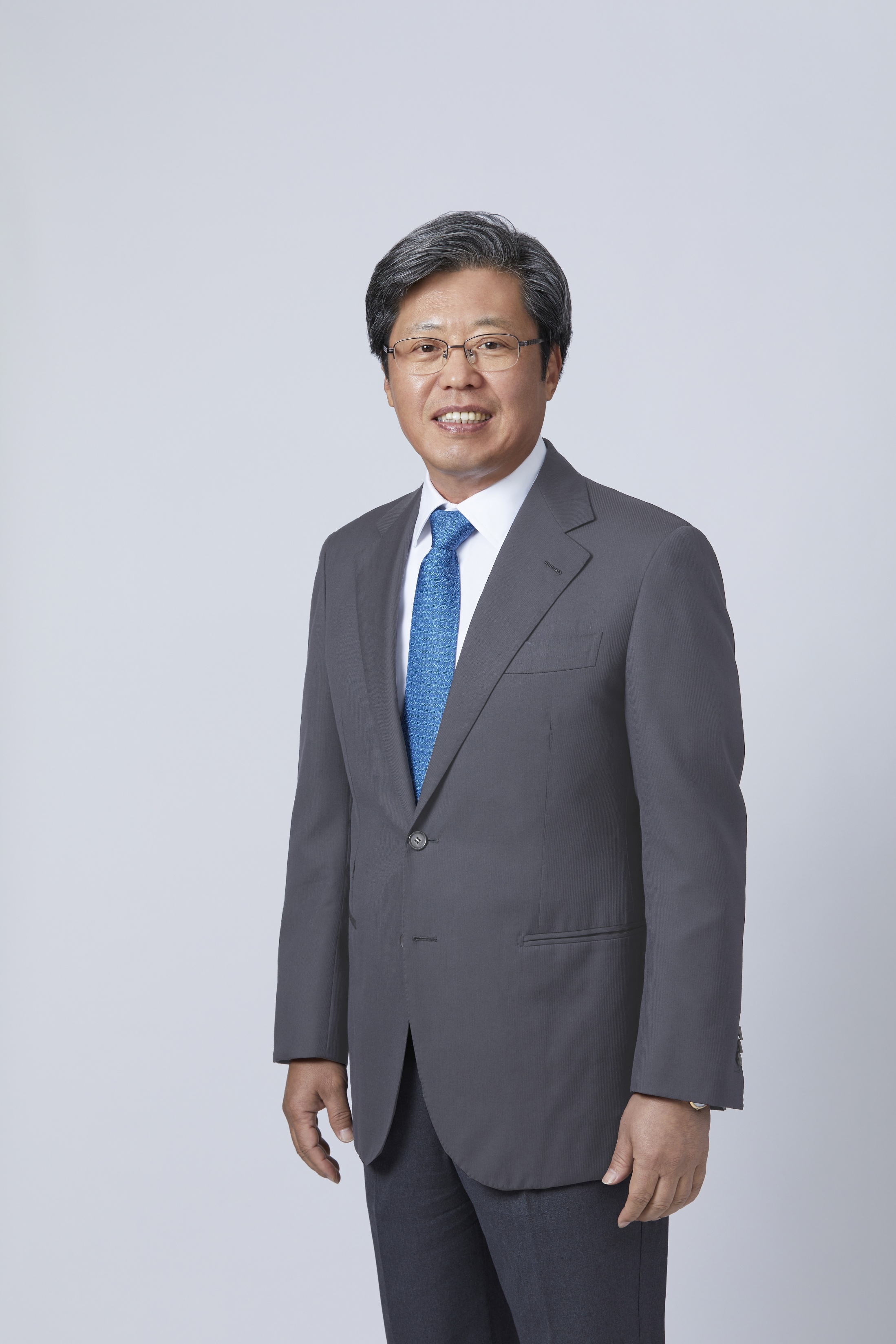
National Research Laboratory for Convergent Degradation Biology (Director:
Hyun-kyu Song, Professor, Department of Life Sciences) was held at the
Centennial
Memorial Samsung Hall, marking the start of full-scale research
activities.
The laboratory was established after the university was s elected as the
lead institution for the National Research Laboratory (NRL 2.0) program jointly
promoted by the Ministry of Science and ICT and the Ministry of Education. A
total budget of KRW 146 billion, including government funding and university
resources, will be invested to expand research personnel and build advanced
research facilities. This represents the largest investment ever made in a
single basic science research field in Korea.
The institute aims to establish a drug discovery platform that
s electively removes disease-causing proteins. By moving beyond conventional
inhibition-based drug development approaches and directly degrading and
eliminating problematic proteins, it is expected to transform the treatment
paradigm for intractable conditions.
Approximately 150 people, including University President Dong-won Kim and
Hyuk-chae Koo, First Vice Minister of Science and ICT, attended the opening
ceremony. Director Song stated, “We aim to establish a virtuous cycle in which
achievements in basic science lead to drug development, positioning ourselves as a world-class
institute that greatly contributes to both industry and patients.”
2026-03-06
조회수 : 16
-
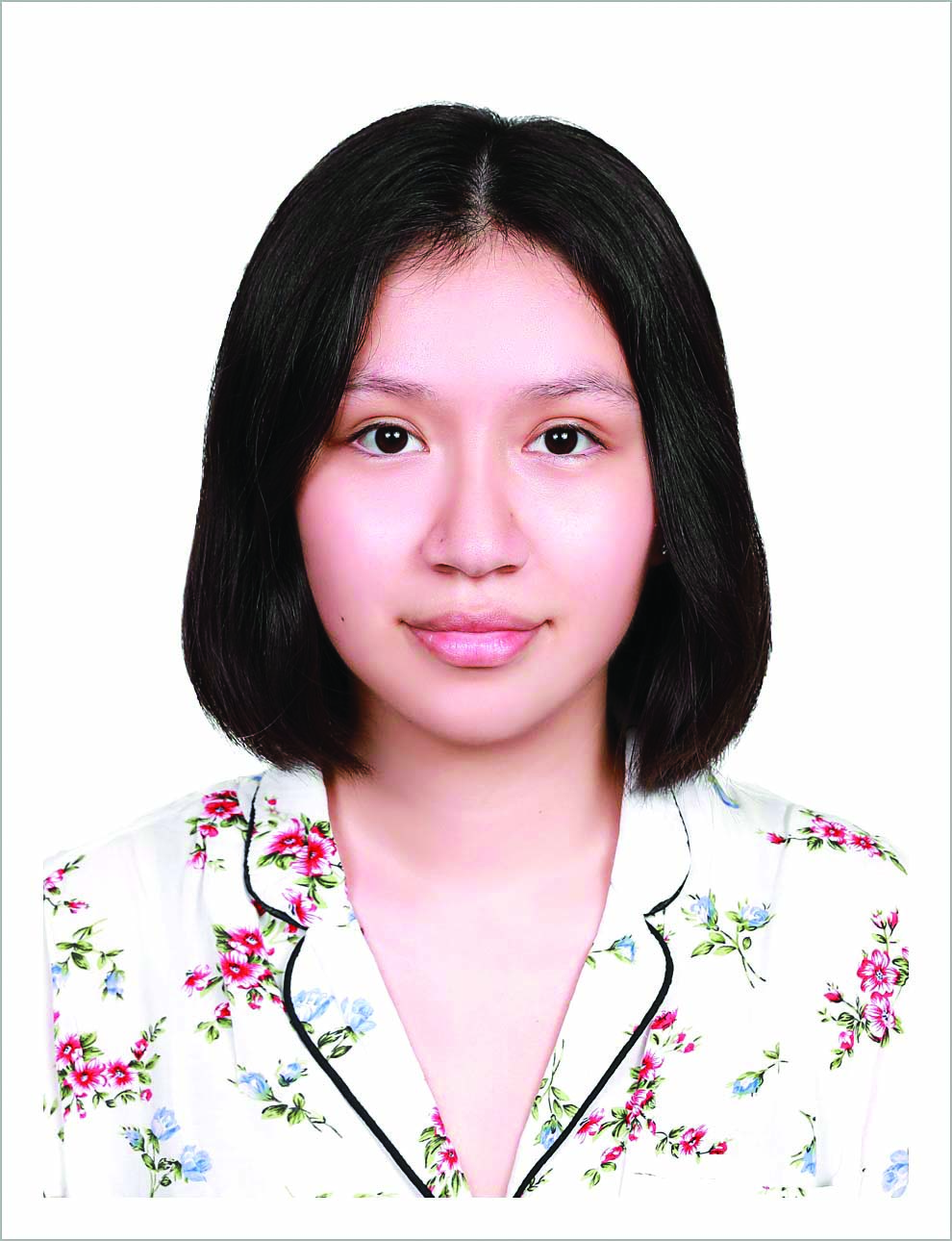
We met Fatima bint Hashem (Linguistics
’18), the alumna who became a hot topic last November when Lee Jae-myung,
during a state visit to the United Arab Emirates, warmly greeted her first.
By
Park Guk-kyung, ReporterFatima bint Hashem (Linguistics ’18) Protocol Team, Sheikh Zayed Grand
Mosque CenterQ. It’s a pleasure to meet you, Fatima. Could you briefly introduce
yourself?A. Hello to all fellow alumni. I’m
Fatima bint Hashem from the United Arab Emirates. I currently work on the
protocol team at the Sheikh Zayed Grand Mosque Center in Abu Dhabi. As the
mosque is a symbol of the city, we receive many distinguished guests, and my
role is to oversee official protocol and hospitality.
Q. During the recent state visit by the President of the Republic of
Korea, there was a viral moment when President Lee Jae-myung recognized you as
a Korea University alumna first and asked you about it. Could you tell us more
about what happened?A. I was honestly very surprised
(laughs). During the preparation process, my résumé was shared with the Korean
Ministry of Foreign Affairs, and it seems the President reviewed it himself.
Being able to mention my alma mater—where I laid the foundation for my personal
and academic growth—at an official diplomatic event was incredibly meaningful
and something I’m very proud of.
Q. We understand you studied abroad on a government scholarship. Why did
you choose Korea University?A. It’s a bit embarrassing to say
myself, but I did quite well academically in high school (laughs). Naturally, I
wanted to study at a top university, and I believed Korea University represents
the best of Korean higher education. Before enrolling, I studied at the
university’s Korean Language Center and experienced the campus firsthand.
That’s when I became certain that I wanted to complete my undergraduate studies
there. Over the next seven years, I was able to deeply explore Korean and
linguistics and build strong expertise in my field.
Q. Looking back, there must have been moments that were possible
specifically because you were a Korea University student.A. The most unforgettable memories are
the relationships I formed with international students from all over the world.
Those connections would have been impossible without Korea University. I also
can’t leave out the annual Korea–Yonsei Games. The positive energy I felt then
was truly special—something only a Korea University student could experience.
Q. Those experiences seem to have led naturally into your current career.
How has what you learned at your alma mater connected to your work today?A. Studying linguistics taught me how to
use language in a structured and precise way, which has been a huge asset. In
protocol settings, I can naturally use formal Korean when needed. Also, the
“ppalli-ppalli” (fast-paced) culture I picked up while living in Korea has
unexpectedly become one of my strengths. In protocol work, where every minute
and second matters, this mindset is highly valued.
Q. Do you ever feel the impact of being a “Korea University alumna” while
working overseas?A. Absolutely. When I say I studied at
Korea University, people often show great interest. Since the university’s name
includes the country name “Korea,” it naturally opens conversations. At my
current workplace, my academic background and Korean language skills are highly
regarded, and I often feel that the trust placed in me is rooted in my identity
as a Korea University graduate.
Q. Are you still connected with Korea University today?A. Of course. I stay in touch with
friends from my university days through social media. Although there isn’t an
official alumni association in the UAE, I often meet students preparing to
study in Korea and share my experiences with them. Being able to offer
realistic advice about campus life and academics is a great joy for me.
Q. Finally, what does Korea University mean to you today?A. To me, Korea University represents
resilience, decisiveness, and inspiration. The time I spent there was a
precious starting point that enabled me to step confidently into a much wider
world.“Did you attend Korea University?” — the viral moment
(Source: Jeonju MBC YouTube)
Won first place on the Black Team at Gimbap Black &
White Masters, held in Dubai on January 28. Fatima (alumna) is
second from the left; Song Mi-ryeong, Minister of Agriculture, Food and
Rural Affairs, is in the center.With
actor Jung Hae-in during his visit to Abu Dhabi.
2026-03-06
조회수 : 3
-
Opening a New Era
of Global NetworkingThe Alumni Association has unveiled a
newly redesigned website. Featuring multilingual translation services, the
introduction of an AI chatbot, and a fully revamped facility reservation
system, the renewal aims to strengthen the global alumni network while
maximizing user convenience. Building on this u pdate, the Association plans to
continue providing a digital environment optimized for its members.
By Seo Chang-hoon, Senior ReporterKorea University Alumni Association has
undertaken a major overhaul of the core functions of its official website since
January this year, with the goal of enhancing convenience for alumni and
reinforcing its global network. This renewal reflects the rapidly changing
digital landscape and integrates advanced IT technologies so that alumni can
easily access Association news and services anytime, anywhere.Introduction of Multilingual Translation ServicesOne of the most notable changes is the
introduction of multilingual translation services for alumni around the world.
To ensure that international alumni scattered across various countries can stay
informed about their alma mater and the Association without language barriers,
key website content is now available in seven languages: English, Chinese,
Japanese, French, Spanish, Indonesian, and Vietnamese. This initiative is
expected to strengthen bonds among alumni both in Korea and abroad, while
elevating the global standing of the Alumni Association.First AI Chatbot Among Korean University Alumni
AssociationsThe Association has also launched a new
AI chatbot service capable of providing real-time responses 24 hours a day. The
chatbot delivers immediate answers to frequently asked questions (FAQ),
guidance on celebration and funeral services, and information on upcoming
events, handling routine and repetitive inquiries efficiently. As a result, the
administrative workload of the Association is reduced, while alumni can access
the information they need without waiting.Comprehensive Renewal of the Facility Reservation
SystemTo improve accessibility to Alumni Hall
facilities, the reservation system has also been fully renewed. Previously
complex procedures have been simplified, and an intuitive user interface (UI)
has been introduced, allowing users to check real-time availability and submit
reservation requests in one seamless process. This upgrade is expected to
significantly enhance user satisfaction by enabling faster and more accurate
reservations when planning meetings or events.Through this website renewal, the Alumni
Association has strengthened its role as an online communication hub and plans
to continue implementing u pdates by actively reflecting alumni feedback to
provide an optimized digital environment. Detailed information on the new
features and how to use them can be found on the official Alumni Association
website (www.kuaa.or.kr).Captions
Multilingual translation settings can be accessed from the top of
the homepage.
The newly
redesigned homepage interface
The u pdated reservation
page with real-time status checks and application featuresThe AI
chatbot can be accessed via the button at the bottom right of the homepage.
2026-03-06
조회수 : 15
-
For alumni who have long been interested
in reconnecting but hesitated due to not having contact information, the Alumni
Association has prepared a comprehensive communication guide. In celebration of
the end of the year and New Year season,
the Association has newly reorganized the e xecutives roster and compiled a
complete list of “Alumni Association Contact Points” encompassing colleges,
regional chapters, and professional organizations.
This initiative aims to strengthen the
bonds among alumni so that, wherever they may be, they can continue to feel the
warmth of their alma mater. With accessible communication channels now in place
for anyone to join, alumni are encouraged to experience the uniquely strong
sense of connection that defines Korea University.
In particular, to enhance the clarity and
accessibility of the global alumni network, , the official English names of
overseas regional alumni associations have been changed from “Korea University
Alumni Association of [Region]” to the crimson-colored “Korea Alumni Club of
[Region].”
Written by Seo Chang-hoon, Senior
Reporter
• Inquiries & Tips: Alumni
Association Secretariat
Tel. 1588-1905 | Email: korea1905@kuaa.or.kr
Easy text tips: 010-9542-1905https://kuaa.or.kr/member/introduce/network.doDomestic ClubSeoulGangnam
Cha Kyung-ryeol (Civil Engineering ’87)
Chair
Kim Seon-gyu (Education ’17) Secretary
GeneralGangdong & Songpa
Won Seong-chan (Broadcasting ’90) ChairGangseo & Yangcheon
Jeong Min-young (Law ’84) Chair
Ko Tae-jin (Food & Resources ’93)
Executive DirectorGwanak
Lee Jang-ju (Law ’85) Chair
Lee Seung-hong (Law ’85) General Affairs
DirectorNowon
Yoo Chang-hee (Business Administration
’83) ChairDobong & Gangbuk
Kim Chi-yong (Journalism ’83) Chair
Shin Jang-woo (International Education
’87) Executive DirectorDongdaemun
Lim Jong-min (Physical Therapy ’04)
Chair
Lim Tae-hyun (Radiological Science ’04)
Executive DirectorSeocho
Song Jun-gyu (Mechanical Engineering
’85) Chair
Yoo Tae-woo (Education ’87) Executive
DirectorSeongbuk
Lim Hee-deuk
(Chinese Language & Literature ’83) ChairYongsan
Kim Yoon-jae (Law ’88) ChairEunpyeong
Lim Dong-sik (Law ’87) Chair
Kim Hyun-jae (Chemical & Biological
Engineering ’07) Executive DirectorJongno
Hong Gi-song (Statistics ’64) Chair
Namgung Myung-hwa (Education ’89)
General Affairs DirectorJungnang
Lee Jin-hyun
(Business & Economics ’83) Chair
Jeong Jong-tae (History ’64) Executive
Director
Gangwon ProvinceGangneung
Ko Seok-tae (Business Administration
’83) Chair
Kim Jong-hong (Food Resources Economics
’92) General Affairs DirectorDonghae & Samcheok
Hwang Soo-hak (Public Health ’14) Chair
Shin Jong-geun (Mechanical Engineering
’82) General Affairs DirectorSokcho
Park Hyung-soo (Broadcasting ’91) Chair
Lee Gyu-ho (Medicine ’97) General
Affairs DirectorWonju
Kim Dae-joong (French Language &
Literature ’84) Chair
Hong Seok-heon (Law ’94) General Affairs
DirectorChuncheon
Choi Young-jae (Broadcasting ’81) Chair
Kim Dong-gyu (Broadcasting ’87) General
Affairs DirectorTaebaek
Lee Sang-chul (Public Administration
’77) Chair
Lee Jung-ho (Business Administration
’82) General Affairs Director
GyeonggiGanghwa
Namgung Ho-sam (Medicine ’75) ChairGoyang
Jung Bong-sik (Applied Statistics ’88)
Chair
Choi Tae-seon (History Education ’94)
Executive DirectorGwangmyeong
Jeon Dong-geun (Electronics Engineering
’82) Chair
Park Sung-jin (French ’90) General Affairs
DirectorGwangju
Kim Yoon-ho (Public Administration ’84)
General Affairs DirectorGuri
Lee Byung-chul (Industrial Engineering
’80) Chair
Kim Kyung-joo (Physical Education ’98)
Secretary GeneralGimpo
Bae Myung-seon (Economics ’86) Chair
Kwon Hyuk-il (Life Sciences ’98) General
Affairs DirectorBucheon
Jung Bo-yoon (Medicine ’81) Chair
Seol Kyung-jong (Public Administration
’98) General Affairs DirectorSeongnam·Bundang
Hwang Young-oh (Electronics Engineering
’81) Chair
Lim Sun-hwa (English Education ’89)
Secretary GeneralSuwon
Lim Do-pyung (Japanese ’85) Chair
Kim Wan-wook (Political Science ’88)
General Affairs DirectorAnsan
Hwang Jin-seok (Geography Education ’86)
Chair
Lee Won-hee (Law ’99) Executive DirectorAnseong
Kang Gil-bok (Law ’82) ChairAnyang·Gunpo·Uiwang·Gwacheon
Lee Beom-hae (Materials Engineering ’72)
Chair
In Tae-kwan (Law ’88) Executive DirectorYangpyeong
Kim Kyung-seok (Applied Statistics ’83)
Chair
Lee Young-wook (Agro-Biology ’87)
General Affairs DirectorYeoju
Han Sang-won (Medicine ’88) ChairYongin
Ahn Seung-hee (Chemical Engineering ’76)
Chair
Park Han-sik (Japanese ’92) Executive
DirectorUijeongbu
Kim Moo-yeol (Architecture ’80) Chair
Lee Jin-woo (Broadcasting ’89) General
Affairs DirectorIcheon
Na Jong-joo (Animal Science ’82) Chair
Lee Jong-seop (Public Administration
’85) General Affairs DirectorPaju
Kim Kyung-woo (Applied Statistics ’86)
Chair
Chun Sung-hwan (Agro-Biology ’86)
Executive DirectorPyeongtaek
Shin Chung-hyun (English Education ’85)
Chair
Kim Geun-hoe (Physical Therapy ’01)
General Affairs DirectorPocheon
Kim Jun-han (Law ’85) Chair
Lee Deok-joo (Food Resource Economics
’94) General Affairs DirectorHwaseong
Lee Myung-jae (Mechanical Engineering
’77) Chair
Yoon Sung-joo (Sociology ’92) General
Affairs Director
GyeongnamGeoje
Son Jin-il (Agricultural Economics ’83)
Chair
Kim Kyung-seop (Business Administration
’92) SecretaryNamhae
Kang Chang-wook (Public Administration
’60) Chair
Kim Du-il (Agricultural Economics ’70)
SecretaryJinju
Yoon Sung-gyu (Agricultural Economics
’68) Chair
Lee Young-jo (English Education ’92)
SecretaryChangwon & Gyeongnam
Kim Jong-seong (Political Science &
Diplomacy ’90) Chair
Kim Kyung-ryong (Business Administration
’06) Executive DirectorTongyeong & Goseong
Yoon Young-jin (Physical Education ’80)
Chair
Kim Ki-seong (Medicine ’93) General
Affairs Director
GyeongbukGyeongju
Jang Moon-gu (Sociology ’70) Chair
Lee Jong-seok (English Language &
Literature ’90) Executive DirectorPohang
Moon Chung-do (Agricultural Science ’76)
Chair
Lee Hang-woo (Japanese Language &
Literature ’84) General Affairs Director
Gwangju & Jeonnam
Kim Hae-yong (Business Administration
’81) Chair
Joo Sung-sik (Business Administration
’90) Secretary
Daegu
Kim Hyun-hwan (Law ’81) Chair
Kang Chang-oh (Law ’95) Executive
Director
Daejeon · Sejong · Chungnam
Jung Kyo-soon (Law ’74) Chair
Kim Min-soo (Chemical Engineering ’81)
Secretary-General
Busan
Park Hyung-jun (Law ’83) Chair
Koo Kyung-ae (Statistics ’87) Secretary
Ulsan
Lee Hong-joo (Chemical Engineering ’81)
Chair
Kim Bae-jae (Business Administration
’88) Executive Director
Incheon
Lee Hee-jae (Agricultural Economics ’77)
Chair
Kim Yong-hwan (Business Administration
’84) Executive Director
JeonnamMokpo
Bae Yong-tae (Public Administration ’75)
Chair
Kim Soon-ho (Law ’94) SecretarySuncheon
Lee Sung-geun (Electronic Engineering
’81) Chair
Yang Dong-ho (Political Science &
Diplomacy ’92) SecretaryYeosu
Kwak Dong-hyun (Business Administration
’82) Chair
Lee Sam-hyung (Economics ’89) Secretary
JeonbukGunjang
Kim Hyung-joo (Civil Engineering ’79)
Chair
Kim Jae-won (English Education ’86)
SecretaryIksan
Cho Seok-nam (Korean Literature ’79)
Chair
Kim Jong-seong (Law ’93) SecretaryJeonju
Lee Byung-kwan (Medicine ’73) Chair
Heo Kwon-hoe (English Literature ’92)
Executive DirectorJeongeup
Ko Sung-hwan (Philosophy ’90) Chair
Ahn Mi-geun (English Literature ’93)
Secretary
JejuSeogwipo
Heo Yong-jin (Law ’80) Chair
Lee Moon-seok (Business Administration
’87) SecretaryJeju
Han Dae-sam (Law ’82) Chair
Kim Jung-yeol (Education ’85) Secretary
ChungnamGongju
Eo Yoon-kyung (Korean History ’83) Chair
Kim Jae-yoon (Food Science ’93) SecretaryDangjin
Kim Seok-jong (Law ’83) Chair
Cho Yong-il (Journalism & Mass
Communication ’83) Executive DirectorSeosan & Taean
Han Seung-dong (Chemical Engineering
’83) Chair
Kang Dong-gun (Mechanical Engineering
’94) SecretaryAsan
Cho Guk-hyung (Metallurgical Engineering
’72) Chair
ChungbukJecheon & Danyang
Kim Sang-hyun (English Literature ’81)
Chair
Eom Jae-min (Korean Literature ’87)
SecretaryCheonan
Jung Soon-pyung (Political Science &
Diplomacy ’77) Chair
Kim Oh-nyeon (Animal Science ’83)
SecretaryCheongju
Kim Yong-hyun (Business Administration
’80) Chair
Lee Tae-hee (Mechanical Engineering ’92)
Executive Director
Chungju
Jeon Jae-hoon (Chemical Engineering ’81)
Chair
Kim Jae-kwon (Food Engineering ’87)
SecretaryOverseas ClubsUnited StatesLos Angeles (Southern California)
Kim Jin-hyung (History ’83) Chair
Lee Young-jin (Mathematics ’96)
Secretary GeneralNew York
Lee Kyung-ryeol (Business Administration
’83) Chair
Ha Mi-sook (Education ’82) General
Affairs DirectorNew Jersey
Ha Yeon-seung (Chinese Language &
Literature ’81) ChairDallas
Cho Sung-rae (Business Administration
’82) Chair
Song In-chul (Economics ’88) General
Affairs DirectorSan Francisco (Northern California)
Lee Soo-yeon (Biology ’86) ChairWashington, D.C.
Baek Seung-ja (Education ’82) Chair
Lee Jong-hyuk (Electrical Engineering
’86) Executive Director
South Africa
Min Kyung-joon (Law ’65) Chair
Netherlands
Byun Sang-seop (Industrial Engineering
’91) Chair
Oh Seung-jin (Russian Language &
Literature ’01) General Affairs Director
New ZealandAuckland
Yoon Jong-pil (International Trade ’83)
Chair
Kim Seung-hyun (Chemistry ’83) General
Affairs DirectorChristchurch
Park Ki-sung (Education ’80) Chair
Lee Jong-tae (Philosophy ’88) General
Affairs Director
Taiwan
Park Byung-seon (Linguistics ’89) Chair
Jeon Yu-ri (Chemical Engineering ’02)
General Affairs Director
GermanyFrankfurt
Kim Soon-geun (International Trade ’84)
Chair
Han Dong-cheon (Chemistry ’88) General
Affairs Director
Malaysia
Kang Jun-gu (Statistics ’90) Chair
Lee Dong-woo (International Trade ’91)
General Affairs Director
Mexico
Mo Woo-jin (Spanish language &
Literature’90) Chair
Nam Sang-man (Spanish language &
Literature ’97) General Affairs Director
RussiaMoscow
Kim In-bae (Statistics ’88) Chair
Myanmar
Lee Jong-kwon (Statistics ’86) Chair
VietnamHanoi
Bae Yong-geun (Law ’92) Chair
Jung Hong-cheol (Materials &
Financial Engineering ’96) General Affairs DirectorHo Chi Minh City
Kwak Tae-sam (Chinese Language &
Literature ’90) Chair
Park Jin-woo (Chinese Studies ’02)
General Affairs Director
Brazil
Kim Jun-woo (Law ’95) General Affairs
Director
ChinaBeijing
Yoon Kyung-rok (Political Science &
International Relations ’89) Chair
Choi Heung-gyu (Chinese Language &
Literature ’83) General Affairs DirectorShandong (Qingdao)
Park Bok-geun (International Education
’87) Chair
Cho Il-joo (English Education ’90)
General Affairs DirectorShanghai
Jang Dong-jun (Agricultural Economics
’93) Chair
Shin Geun-ha (Food Resources Economics
’05) General Affairs DirectorDalian
Moon Sung-min (Chinese Language &
Literature ’85) Chair
Kim Ki-wook (Business Administration
’01) General Affairs DirectorXi’an
Kim Man-cheol (Chemical & Biological
Engineering ’97) General Affairs DirectorShenzhen
Hwang Sang-mook (International Trade
’84) ChairYantai
Lee Seung-jae (Mechanical Engineering
’80) Chair
Son Seok-kwon (International Trade ’88)
Executive DirectorTianjin
Jeon Myung-hyun (Chemical Engineering
’73) Chair
Kwak Jun-hyup (French Language &
Literature ’90) General Affairs Director
Sweden
Jung Hye-young (English Education ’82)
Chair
Jang Gi-cheol (Chemical Engineering ’94)
General Affairs Director
Spain
Jang In-joo (Chemical Engineering ’84)
Chair
Singapore
Park Joo-man (Business Administration
’87) Chair
Lee Sook-mi (Horticulture ’86) General
Affairs Director
United Arab EmiratesDubai
Yoo Dae-yong (Chemical & Biological
Engineering ’97) Chair
Yoon Kwan-joong (Economics ’99) General
Affairs Director
Argentina
Shin Hyun-bae (Journalism ’85) Chair
United KingdomLondon
Jeon Soo-il (Sociology ’89) Chair
Park Eung-gyun (Economics ’02) General
Affairs Director
CanadaVancouver
Lee Heon-gam (Mechanical Engineering
’79) Chair
Han Min-cheol (French Language &
Literature ’87) General Affairs DirectorEdmonton
Noh Woong-gyu (Agricultural Economics
’83) Chair
Noh Hong-sang (Metallurgical Engineering
’77) General Affairs DirectorOttawa
Lee Hee-jung (Electrical Engineering
’79) Chair
Choi Young-geun (Electrical Engineering
’84) General Affairs DirectorCalgary
Kim Dae-hee (Economics ’84) Chair
Yoon Eun-sik (Journalism ’95) General
Affairs DirectorToronto
Lee Hae-seung (Electrical Engineering
’84) Chair
Kim Seo-yeon (Broadcasting ’85) General
Affairs Director
Ukraine
Sang Jae-hyung (Russian Language &
Literature ’87) Chair
Moon Kyung-nam (Russian Language &
Literature ’91) General Affairs Director
Italy
Yeo Jong-yeol (Japanese Language &
Literature ’83) Chair
IndonesiaSurabaya
Lee Je-seop (Food Engineering ’72) ChairJakarta
Jung Yoo-seok (Animal Science ’87) Chair
Japan
Yoon Geon-in (Business Administration
’80) Chair
Chile
Lee Myung-geun (English Language &
Literature ’85) Chair
Kazakhstan
Kim Sang-wook (Korean Language &
Literature ’86) Chair
Jeon Jong-hwan (Russian Language &
Literature ’89) Secretary General
CambodiaPhnom Penh
Lee Ju-pil (Electrical Engineering ’86)
Chair
Jung Hyo-cheol (Geography Education ’00)
General Affairs Director
Costa Rica
Kim Yong-cheol (Metallurgical
Engineering ’88) Chair
ColombiaBogotá
Kim Yong-hyun (German Language &
Literature ’91) Chair
Ahn Jong-gwan (German Language &
Literature ’99) General Affairs Director
Kyrgyzstan
Yoo Min (Political Science &
International Relations ’83) Chair
ThailandBangkok
Jung Eun-seong (Civil Engineering ’87)
Chair
Kim Jong-heum (Architecture ’90) General
Affairs Director
TurkeyEurope
Park Ho-joon (Business Administration
’91) Chair
Tak Jong-ho (Civil Engineering ’02)
General Affairs Director
Poland
Kim Young-wan (Public Administration
’73) Chair
Jeon Byung-gu (Mechanical Engineering
’86) General Affairs Director
France
Ryu Jung-yeol (Russian Language &
Literature ’94) Chair
Choi Jang-min (Business Administration
’11) General Affairs Director
PhilippinesManila
Kim Jung-hoon (Japanese Language &
Literature ’89) Chair
Oh Jae-hoon (Agricultural Economics ’95)
General Affairs Director
Hungary
Jang Sung (Mathematics ’83) Chair
Oh Se-joon (International Trade ’94)
General Affairs Director
AustraliaMelbourne
Lee Sang-kyung (Business Administration
’88) Chair
Oh Yoon-seok (Biological Engineering
’96) General Affairs DirectorSydney
Lee Hee-ryong (Geography Education ’93)
Chair
Choi Rim (International Trade ’93)
Secretary General
Hong Kong
Lee Bong-tae (Business Administration
’92) Chair
Oh Gi-seok (Business Administration ’01)
Secretary GeneralAffiliated
Associations Women Alumni Association
Cho Hee-jin
(Law ’81) Chair
Koo Min-joo (Law ’86) Secretary General
Business Leaders Association
Cho Soo-yeon
(Agricultural Chemistry ’77) Chair
Min Kyung-seok (History ’82) Secretary
GeneralKorea University Sports Association
Yoo In-seon (Materials Engineering ’70)
Chair
Jang Gwang-jun (Economics ’72) Secretary
GeneralGyeomseon Association
Lee Dong-won (Law ’82) ChairJournalists Alumni Association
Kwak Young-gil (English Language &
Literature ’74) Chair
Lee Jin-woo (Business Administration
’89) General Affairs DirectorROTC Alumni Association
Choi Bong-gil (Economics ’87) Chair
Lee Gwan-heon (Physical Education ’84)
Secretary GeneralLegal Professionals Alumni Association
Yoon Sung-won (Law ’82) ChairWomen Legal Professionals Alumni
Association
Oh Sun-hee (Law ’85) ChairCertified Public Accountants Alumni
Association (KCPA)
Jung Seok-woo (Business Administration
’80) Chair
Jeon Yong-wook (Business Administration
’93) General Affairs DirectorLandscape Architecture Alumni
Association
Kim Tae-soo (Environmental &
Ecological Engineering ’01) Chair
Kim Min (Environmental & Ecological
Engineering ’09) Secretary GeneralColleges
College of Nursing
Moon Jung-ran (Nursing ’83) Chair
Cho Yeon-sook (Nursing ’89) General
Affairs Director
College of Business Administration
Lee Dong-seop (Business Administration
’89) Chair
Yang Jung-in Secretary General
College of Engineering
Tae Beom-seok (Chemical Engineering ’76)
Chair
Park Young-chul (Electronic Engineering
’77) Secretary General
College of International Studies
Park Jong-han (International Studies
’11) Chair
Oh Yoon-seong (International Studies
’15) General Affairs Director
College of Liberal Arts
Kwon Young-jin (German Language &
Literature ’86) Chair
Kim Kyung-tae (Russian Language &
Literature ’89) Secretary General
College of Health Sciences
Kim Jung-boon (Clinical Pathology ’84)
Chair
Kim Chang-hyun (Clinical Pathology ’89)
Secretary General
College of Education
Kim Mi-sook (Geography Education ’81)
Chair
Yoo Soo-ji (Physical Education ’89)
Secretary General
College of Life Sciences
Han Moon-soo (Plant Science ’82) Chair
Choi Hong-yeop (Agricultural Chemistry
’82) Secretary General
College of Medicine
Yoon Hyung-seon (Medicine ’80) Chair
Cho Myung-hee Secretary General
College of Science
Kim Sang-tae (Geology ’85) Secretary
General
College of Humanities
Cho Sung-chil (Chinese Language &
Literature ’80) Chair
College of Political Science &
Economics
Woo Yoon-sik (Public Administration ’82)
Chair
Kim Seung-ho (Journalism & Mass
Communication ’92) Secretary General
Department of Psychology
Kim Kwang-soon (Psychology ’83) Chair
College of Commerce & Economics
Park Sun-won (Business Administration
’82) Chair
Graduate School of Business (MSP)
Son Hwan-gi (Class of ’52) Chair
Hwang Woong-jin Secretary General
Executive Program in Construction
Management
(Graduate School of Engineering)
Jeon Yong-deok (Class of ’15) Chair
College of Science & Technology
Kim Tae-jin (Mathematics ’84) Chair
Jung Bong-sik (Applied Statistics ’88)
Secretary General
College of Pharmacy
Kang Dae-won (Pharmacy ’09) Chair
Lee Dae-sung (Pharmacy ’14) General
Affairs DirectorClass
Associations
Class of 1964
Cho Woo-hyun (History ’64) Chair
Class of 1965
Lim Ju-bin (Civil Engineering ’65) Chair
Moon Gwang-ho (Animal Science ’65)
General Affairs Director
Class of 1966
Min Nam-gyu (Agricultural Chemistry ’66)
Chair
Kim Jung-gyu (Public Administration ’66)
General Affairs Director
Class of 1967
Jung Gap-jin (French Language &
Literature ’67) Chair
Yoo Young (Political Science &
International Relations ’67) Secretary General
Class of 1968
Lee Dong-jin (Political Science &
International Relations ’68) Chair
Class of 1969
Heo Jong-gu (Mechanical Engineering ’69)
Chair
Cho Moon-hwan (French Language &
Literature ’69) Secretary General
Class of 1970
Yang Yong-rae (Political Science &
International Relations ’70) Chair
Ahn Dong-jun (Animal Science ’70)
Secretary General
Class of 1971
Hong Yong-taek (Materials Engineering
’71) Chair
Class of 1972
Jeon Woon-gi (Public Administration ’72)
Chair
Yoon Jung-ok (Home Economics Education
’72) Secretary General
Class of 1973
Kim Deok-cheon (Physical Education ’73)
Chair
Kim Ju-sik (German Language & Literature
’73) Secretary General
Class of 1974
Choi Yong-won (Law ’74) Chair
Lee Eui-hyung (Geology ’74) Secretary
General
Class of 1975
Kim Chang-woo (International Trade ’75)
Chair
Nam Sang-woo (Physics ’75) Secretary
General
Class of 1976
Lee Woo-seung (Public Administration
’76) Chair
Lee Hwa-ja (Nursing ’76) Secretary
General
Class of 1977
Lee Sang-sook (Business Administration
’77) Chair
Class of 1978
Yoon Rok-rim (Chemistry ’78) Chair
Lee Chun-ho (Law ’78) Secretary General
Class of 1979
Jung Jin-taek (Mechanical Engineering
’79) Chair
Choi Jong-ryeol (Physical Education ’79)
Secretary General
Class of 1980
Kwon Hyuk-geun (Materials Engineering
’80) Chair
Yoon Seung-ho (English Language &
Literature ’80) Secretary General
Class of 1981
Kim Jong-il (English Education ’81)
Chair
Kang Jeon-chan (Law ’81) Secretary
General
Class of 1982
Lee Myung-hyun (Law ’82) Chair
Class of 1983
Park Jong-hoon (Medicine ’83) Chair
Shin Myung-chul (Agricultural Chemistry
’83) Secretary General
Class of 1984
Cho Young-bong (Law ’84) Chair
Song In-beom (Physical Education ’84)
Secretary General
Class of 1985
Lee Ju-hee (English Language &
Literature ’85) Chair
Park Young-sik (German Language &
Literature ’85) Secretary General
Class of 1986
Kwon Young-jin (Spanish Language &
Literature ’86) Chair
Jang Yoon-seok (Spanish Language &
Literature ’86) Secretary General
Class of 1987
Choi Chang-young (Law ’87) Chair
Yoo Tae-woo (Education ’87) Secretary
General
Class of 1988
Kim Jae-hoon (Metallurgical Engineering
’88) Chair
Kim Yong-hee (Computer Science ’88)
Secretary General
Class of 1989
Namgung Myung-hwa (Education ’89) Chair
Park Jung-hoon (Law ’89) Secretary
General
Class of 1990
Kwon Dae-hyun (Law ’90) Chair
Cho In-ho (English Education ’90)
General Affairs Director
Class of 1991
Kim Hyun (English Education ’91) Chair
Kwon Young-tae (Law ’91) General Affairs
Director
Class of 1992
Park Sung-ho (English Language &
Literature ’92) Chair
Han Myung-seok (Business Administration
’92) Secretary General
Class of 1993
Oh Sun-young (Classical Chinese ’93)
Chair
Kim Jung-tae (Electronic Engineering
’93) Secretary General
Class of 1994
Lee Jung-woo (Architecture ’94) Chair
Class of 1995
Lee Won-byung (Statistics ’95) Chair
Kim Eung-joo (Mathematics ’95) Secretary
General
Class of 1996
Shim Seung-hyun (English Language &
Literature ’96) Chair
Seo Young-il (Physical Education ’96)
General Affairs Director
Class of 1997
Kim Hee-kyung (Mathematics ’97) Chair
Park Jae-hyun (Chemical & Biological
Engineering ’97) Secretary General
Class of 1998
Kim Se-jin (Life Sciences ’98) Chair
Class of 1999
Hwang Chang-ha (Physical Education ’99)
Chair
Kim Jae-hyung (Physical Education ’99)
General Affairs Director
Class of 2000
Kim Woo-hyun (Environmental &
Ecological Engineering ’00) Chair
Class of 2001
Kwon Byung-doo (Physical Education ’01)
Chair
Class of 2002
Eom Jae-hwan (Physical Education ’02)
Chair
Class of 2003
Lim Young-joo (Physical Education ’03)
General Affairs DirectorSpecial
Graduate Schools
Graduate School of Business
Administration (AMP)
Park Jang-seon (Class of ’97) Chair
Kim Yong-woo (Class of ’69) Secretary
General
Graduate School of Business
Administration (E-MBA)
Kim Kwang-seon (Class of ’17) Chair
Kim Jong-han Secretary General
Graduate School of Business
Administration (K-MBA)
Heo Beom-moo (Class of ’85) Chair
Kim Jung-kwon (Class of ’85) Secretary
GeneralGraduate School of Engineering (Master’s Program) Kang Hae-gu (Class of ’70) Chair
Kang Cheol-min (Class of ’70) Secretary
General
Graduate School of Education –
Advanced Program in Educational Management
Hwang In-soo (Class of ’15) Chair
Son Byeong-geun (Class of ’16) Secretary
General
Graduate School of Education –
Advanced Program in Global Leadership
Jang Sung-hoon (Class of ’79) Chair
Kim Gi-taek (Class of ’38) Secretary
General
Graduate School of Education (Master’s
Program)
Kim Sung-il (Class of ’23) Chair
Jang Bong-seok (Class of ’88) Secretary
General
Graduate School of International
Studies – Advanced Program
Kim Gyu-hwan (Class of ’11) Chair
Lee Gyu-sang (Class of ’01) Secretary
General
Graduate School of Technology
Management (Master’s & Doctoral Programs)
Jung Yoon-soo (Class of ’87) Chair
Graduate School of Technology
Management (Advanced Program)
Ryu Jae-geun (Class of ’31) Chair
Graduate School of Labor Studies
(Master’s Program)
Kim Sung-rae (Class of ’19) Chair
Baek Nam-sik Executive Director
Graduate School of Labor Studies
(Advanced Program)
Shin Chang-hoon (Class of ’77) Chair
Park Pil-jeon (Class of ’79) Secretary
General
Graduate School of Media Studies
(Master’s Program)
Ko Joon-seok (Class of ’37) Chair
Kim Deok-soo (Class of ’39) Secretary
General
Graduate School of Media Studies
(Advanced Program)
Moon Sang-joo (Class of ’21) Chair
Cho Han-pil (Class of ’90) Secretary
General
Graduate School of Legal Affairs
(Master’s Program)
Kwak Young-jin (Class of ’46) Chair
School of Law (KNA Program)
Lee Jang-hee (Class of ’06) Chair
Park Jong-deok (Class of ’01) Secretary
General
Graduate School of Public Health
(Master’s Program)
Jeon Kyung-soo (Class of ’96) Chair
Kim Kyung-hee (Class of ’11) Executive
Director
Graduate School of Public Health
(Advanced Program)
Jung Sung-gwan (Class of ’98) Chair
Lee Min-woo (Class of ’45) Secretary General
Graduate School of Life &
Environmental Sciences (Master’s Program)
Ahn Deok-soo (Class of ’66) Chair
Kim Sang-ryeol (Class of ’38) Secretary
General
Graduate School of Life &
Environmental Sciences (Advanced Program)
Lee Young-sik (Class of ’11) Chair
Park Jong-cheol (Class of ’14) Secretary
General
Graduate School of Biomedical &
Convergence Sciences (Master’s Program)
Kim Kwang-cheol (Class of ’02) Chair
Cho Ho-rae (Class of ’01) Secretary
General
Graduate School of Information
Security (Master’s Program)
Ko Young-dae (Class of ’04) Chair
Choi Chang-rae (Class of ’01) Executive
Director
Graduate School of Public Policy
(Master’s Program)
Pyo Dae-sung (Class of ’44) Chair
Lee Sung-hoon (Class of ’63) Secretary
General
Graduate School of Public Policy
(Advanced Program)
Lee Jin-hyun (Class of ’83) Chair
Bae Jae-gyu (Class of ’53) Secretary
General
Graduate School of Entrepreneurship
& Business Information (Master’s Program)
Moon Dae-sik (Class of ’63) Chair
Graduate School of Entrepreneurship
& Business Information (Advanced Program)
Lee Hyung-choon (Class of ’10) Chair
Park Hyun-young (Class of ’10) Secretary
General
Graduate School of Computer &
Information Communications (Master’s Program)
Park Se-ik (Class of ’13) Chair
Kim Young-woo Secretary General
Graduate School of Computer &
Information Communications (Advanced Program)
Jung Ha-soon (Class of ’31) Chair
Yoo Ji-hoon (Class of ’31) Secretary
General
Graduate School of Public
Administration (Master’s & Doctoral Programs)
Baek Sung-gu (Class of ’37) Chair
Lee Byung-hee (Class of ’33) Executive
Director
Graduate School of Public
Administration (Advanced Program)
Choi Byung-gu (Class of ’18) Chair
Lee Kwang-soo (Class of ’18) Secretary
General
Kim Dong-seol (Class of ’24) Executive
DirectorClubs &
Special-interest Associations
KUBS
Choi Seung-don (English Education ’87)
Chair
Geomwoo Association
Lee Sang-heon (Medicine ’85) Chair
Son Tae-moo (Business Administration
’97) Secretary
Korea University Newspaper Alumni Association
Lee Uk-yeon (Chinese Language &
Literature ’83) Chair
Alumni Football Federation
Lee Dong-moon (Russian Language &
Literature ’83) Chair
Theater Arts Alumni Association
Cho Seung-hyun (Law ’83) Chair
Rock Band Alumni Association
Kim Sung-han (Sociology ’86) Chair
Moowoo Association
Park Hyung-jun (Physical Education ’95)
Chair
Hwang Guk-hyun (Sociology ’94) Secretary
American Football Alumni Association
Choi Jun-young (Business Administration
’82) Chair
So Sung-ho (Public Administration ’03)
Secretary
Baekgu Association
Kim Hang-gi (Economics ’84) Chair
Yoon Je-seong (Physical Education ’91)
Secretary
Seokju Association
Lee Dong-eun (Agricultural Economics
’88) Chair
Yeokwoo Association
Yang Won-chang (Economics ’86) Chair
Na Tae-young (Public Administration ’88)
Secretary General
Judo Alumni Association
Jin Hee-kwon (Law ’84) Chair
Kyung Je (Economics ’88) Secretary
Tiger Bike Association
Jung Gi-hyun (Electronic Engineering
’88) Chair
Tennis Alumni Association
Kwon Dae-sung (Food Engineering ’87)
Chair
Choral Alumni Federation
Baek Geon-dae (Business Administration
’87) Chair
Hodang Association
Jang Young-cheol (Political Science
& Diplomacy ’66) Chair
Kim Hong-il (Education ’90) Secretary
General
Hoeung Association
Oh Gyu-baek (Food & Resource
Economics ’94) Chair
2026-03-05
조회수 : 52
-
Do you see the difference?The Ongoing Evolution of KU Alumni NewsletterAs we move from an era of reading to an era of seeing, Korea University Alumni News—now celebrating its 56th anniversary—has also embraced significant change. Dressed with a renewed visual identity, the magazine explores how it preserves tradition while reflecting contemporary trends, tracing its evolution across different eras.By Lee Hyun-hwa, Senior Reporter · Lee Jin-young, Chief ReporterGetting Closer to Readers Through a Design Renewal Beginning with the January 2026 issue, Korea University Alumni News underwent a complete design renewal. Passionate readers may have already noticed the change. Since last year, the Alumni Association has steadily experimented with design improvements—an effort driven by both anticipation and pride.With the 120th anniversary of the Korea University Alumni Association approaching in 2027, the redesign represents a renewed commitment to the next century. It also reflects the publication’s quiet confidence as the only university alumni magazine in Korea to have never missed a publication since its founding—now reaching its 666th edition.Established in August 1970 under the idea of serving as “a small newspaper,” Korea University Alumni News once stood as a singular platform during a time when media outlets were limited and press freedom was constrained. It conveyed the voices of Korea University members more vividly than any other medium. Yet over the decades, media channels have diversified, and the influence of print publications has inevitably waned.Geum Gyo-don (Education ’79), who has served on the editorial board for 23 years, reflects: “Just as print media is facing a moment of crisis, alumni publications must also rethink both their content and platforms.” In today’s age of new media and artificial intelligence, the transformation of a magazine long rooted in traditional newspaper layouts was, perhaps, inevitable.Easier to Read, More Pleasant to View, Simpler to NavigateThe core keywords of this renewal are readability and aesthetics. The changes begin at the cover. By removing or minimizing unnecessary visual elements, the redesign draws attention to the masthead and alumni emblem—key markers of the magazine’s identity. A full-bleed image aligned with each month’s theme now anchors the cover, while a streamlined table of contents placed to the right allows the reader’s eye to move naturally across the page. Going forward, each cover will continue to visually interpret the theme of the issue.The interior layout has also been refined with readers in mind. Considering the magazine’s primary readership, typefaces set at comfortable sizes with generous line spacing were introduced to significantly improve legibility. Typography and illustrations are carefully matched to the tone of each article, while subheadings, lead-ins, and visual cues are used more actively to guide the reading flow. High-quality photography, illustrations, and infographics introduce visual variety, ensuring that information is delivered with both clarity and engagement.The Beauty of Empty Space, Design with the Reader in MindA defining feature of this renewal is its emphasis on the aesthetics of empty space. Intentional spacing between sections prevents visual congestion and allows the reader’s gaze to flow naturally from one element to the next.This approach has been especially beneficial for straight-news sections such as Alumni Square, Campus News, and Social Contribution. Through carefully calculated consistency and variation in headline, subheadline, and body text design, even repeated layouts now present information with a clear hierarchy and renewed visual balance.Significant attention was also given to improving print quality. Beginning with the January issue, printing has moved to the Korea Economic Daily’s Bupyeong facility, equipped with state-of-the-art web offset presses from Manroland Goss—the world’s leading manufacturer in the field. Utilizing automated robotic systems and AI-assisted technologies, the facility delivers sharp color reproduction and consistently high print quality.As Korea University Alumni News enters 2026 with sweeping changes, its efforts to strengthen communication among alumni and enhance the efficiency of information delivery will continue to evolve.Photo Captions1.January 2026 issue following the complete design renewal2–3. Interior spreads from the January issue highlighting the effective use of empty space4.Alumni Square, reorganized with a newly calibrated grid system
2026-03-05
조회수 : 36
-
Choi Chan-hee (Law'51) during the interviewFaith and Responsibility Preserved from a Wartime Campus to TodayIn 1951, in the midst of a war where artillery shells flew across the battlefield, a young woman enrolled in the Department of Law at Korea University. That student was Choi Chan-hee (Law ’51), who planted the seed of “unity among women alumni” while enduring the hardships of modern Korean history. As the first female reporter of The Korea University Newspaper and the founding president of Seoknanhoe, the path she walked is also a record of the history of women at her alma mater. When we met her at her home in Yongin, she recalled those days with remarkably vivid memories—hard to believe for someone now in her nineties.Choi Chan-hee (Law ’51)Advisor, Women Alumni AssociationScholarly Passion Amid War: Her Days as a Refugee Student in DaeguBorn in 1932 in Yangyang, Gangwon Province, Choi grew up under the influence of her father, an independence activist, who instilled in her the belief that “studying is a way to protect the nation.” While attending Gyeonggi Girls’ High School (formerly Gyeonggi Girls’ High School), she experienced the outbreak of the Korean War. She recalled tense moments when she disguised herself as a rice trader to avoid the watchful eyes of the North Korean army.In 1951, she took the entrance examination for Korea University in Choryang-dong, Busan.“My father had been involved in the independence movement,” she said. “Under his teaching that we must study in order to defeat Japan, I did not want to stop learning simply because I was a woman.”When asked why she chose to study law, Choi replied:“I saw my father suffer many injustices. I felt that only by understanding the law could I help people who had been wronged and fight for them. That’s why I chose the Department of Law.”Her father, the late Choi In-sik, was posthumously awarded the Order of Merit for National Foundation (Ae-jok Medal) on September 3 last year.During the war, when the university temporarily relocated its campus to Wondae-dong in Daegu, she continued her studies while staying in a small thatched house near the residence of President Yu Jin-oh.“I was the only female student, but I was never intimidated. I even went to the Daegu police chief and boldly said that I would teach the children if they provided me with meals.”The First Female Reporter of The Korea University Newspaper And the Courage of a Charismatic SeniorChoi also shared her special connection with poet and professor Jo Ji-hoon (pen name; real name Jo Dong-tak).When she entered Korea University, she discovered that Jo Ji-hoon—who had been her homeroom teacher during her high school years—was now a professor there. It was he who s elected her as the first female reporter of the university newspaper.“Professor Jo Ji-hoon nurtured my literary sensibilities. During the refugee years, when my face had turned pale from malnutrition, he even took me around and made sure I took nourishing medicine. At his suggestion, I began my work as a reporter by writing a letter to my mother for the newspaper.”One story from that time became well known. When a large fight broke out on campus between students from the Gyeongsang and Jeolla regions—something even professors struggled to stop—Choi stepped into the middle of the chaos.“You’ve come all the way here as refugees, yet you’re fighting instead of studying? Kill me first before you fight!”Her fearless scolding was so powerful that it overwhelmed even the male students.She also excelled academically. One day, when she entered a classroom, she saw her own exam paper posted on the wall. The professor scolded the male students, saying, “There are so many men here—yet you can’t outperform a single woman?”The Founding of Seoknanhoe, The Beginning of a Women’s Network at Korea UniversityIn 1967, Choi gathered women alumni who had been scattered across different places and founded Seoknanhoe, the women alumni association. The name “Seoknan” was suggested by poet Lee Eun-sang, who derived the character Seokfrom Seoktap, the stone pagoda symbolizing Korea University.“At the time, there were so few female students that they were often left unprotected. Even after graduation, their influence rarely continued. I was convinced that women had to unite—so that they could strengthen Korea University and help those who were socially vulnerable.”Choi emphasized that the Women Alumni Association was not meant to stand in opposition to men, but rather to become another pillar that strengthens the university.A Foundation for Korea University to Reach the WorldAs the first woman in Korea to earn a master’s degree in law, Choi remained actively involved in legal practice and public activities centered on labor law. She worked to ensure that the voices of workers could be heard within institutional systems. Her belief—that workers are not merely objects of protection but subjects with rights—guided her lifelong work.“Labor law is not a law for special people. I believe it is a system that allows ordinary individuals to protect their basic dignity.”Today, Choi is one of the oldest living alumni of Korea University. What does the university mean to her?“Korea University is the very foundation of my life. Hearing that female students now make up nearly half of the student body fills me with deep emotion. I hope younger generations will not stand in opposition to men, but instead work together in harmony—becoming a strong foundation for Korea University to grow beyond being the best in Korea and expand into the world.”
2026-03-05
조회수 : 26
-
Han Hyung-soo (Sociology ’66), Professor Emeritus, University of Seoul “Do not live only in reality—live in history.”Leadership in Troubled Times, Asked of Romance of the Three KingdomsFor nearly 20 years since his retirement, Professor Emeritus Han Hyung-soo of the University of Seoul has been lecturing on character studies of Romance of the Three Kingdoms at the Seoul Citizens’ University and various cultural centers. To a man who says he “lives in history,” Professor Hong Yoon-gi (Chinese Literature ’83) of Korea University’s Department of Chinese Language and Literature asked why Romance of the Three Kingdoms still deserves to be read today.By Lee Hyun-hwa, Senior ReporterPhotos by Choi Ki-young, Weekly Editor (From left in the photo) Professor Hong Yoon-gi and Professor Emeritus Han Hyung-sooPublishing Character Studies of the Three Kingdoms at the Age of 81Hong Yoon-gi (Hong): I remember first meeting you through the “Association of Professors Who Love Romance of the Three Kingdoms.” As I recall, you also founded the group. When did you first become deeply fascinated with Romance of the Three Kingdoms?Han Hyung-soo (Han): I was born in a rural village called Cheonmyeon, Jangsu County, at the foothills of Deogyusan Mountain. When I entered middle school, I went alone to Jeonju to study. To ease my loneliness, I read whatever books I could find at the provincial library, and that was when I first encountered Romance of the Three Kingdoms. I was thrilled by the stories of heroes filled with loyalty and chivalry. (laughs) Among the many editions, the Jeongeumsa edition was by far the best.Hong: I can almost picture a boy staying up all night reading books. (laughs)Han: Later, when I took a short leave of absence during high school and studied Tonggam Jeoryo at a village Confucian school back home, I realized something. “Ah, Romance of the Three Kingdoms is a story, but it is also history.” From that moment on, it became for me the point where literature, history, and the understanding of human beings intersect.Hong: You recently published two new books at the same time. Like your 2017 book Character Studies of the Warlords of the Three Kingdoms, they are also works of “character studies.” Most books on the Three Kingdoms focus on events. Is there a particular reason you concentrate on people?Han: In the end, history is shaped by the choices of individual human beings. Rather than reading Romance of the Three Kingdoms as a tale of heroes or political scheming, I wanted to see how human character and will operate at historical turning points.If Character Studies of the Warlords of the Three Kingdoms marked the opening of my work on Three Kingdoms personalities, the two new volumes—Strategists and Generals Who Helped Cao Cao Realize His Dream of the Realmand Strategists and Generals Who Helped Liu Bei Restore the Han Dynasty—represent its core.Among the three kingdoms of Wei, Shu, and Wu, which formed the main axis of the era, Sun Quan’s Wu did not strongly pursue the dream of unifying the realm. By contrast, Cao Cao sought to realize his vision of the realm through “pacification,” while Liu Bei attempted to revive the Han dynasty through “integration.” These two figures stand at opposite poles in Romance of the Three Kingdoms, forming a stark contrast as heroes.Hong: It is also interesting that you focus not only on the rulers but on the strategists and military commanders who served them.Han: Cao Cao and Liu Bei, together with the strategists who supported them, drew the blueprint for their dreams through cool judgment and insight into their times, while the generals dominated the battlefield through decisiveness and devotion.By tracing how people of different personality types made political and strategic choices with what I call “conscious and active agency” as their guiding helm, I sought to examine how these two heroes tried to turn ideals into reality.Hong: As a scholar of Chinese literature myself, what impressed me most was your work of translation. Rendering records from the second and third centuries—from the Yellow Turban Rebellion in 184 to the founding of the Jin dynasty—into modern language is not an easy task even within Chinese academia. You managed to accurately and extensively digest enormous bodies of annotation and translation, including Pei Songzhi’s Annotations, for which modern-language translations are extremely rare.Han: Hearing that from a leading scholar of Chinese literature is truly embarrassing. (laughs) Luo Guanzhong’s Romance of the Three Kingdoms, which moved me deeply in my youth, is fascinating, but it also has clear limitations—fantastical political scheming and exaggerated violence. In this work, I attempted to strip away the fictional and exaggerated elements of Romance of the Three Kingdoms and return to historical records as the foundation.History Is Shaped Not by Heaven’s Timing, but by Human StrategyHong: Personally, I consider Cao Pi’s accession to the throne the most historically significant event in the Three Kingdoms period. What do you see as the major turning points?Han: There are four: the Battle of Guandu, the Battle of Red Cliffs, the Battle of Hanzhong, and the Battle of Yiling.With victory at Guandu, Cao Cao pacified the Central Plains and Hebei and advanced to become Duke and later King of Wei. The Battle of Red Cliffs frustrated Cao Cao’s ambition to unify the realm and established the tripartite structure of Wei, Shu, and Wu. The Battle of Hanzhong marked the point at which Liu Bei came to stand directly opposite Cao Cao, and the Battle of Yiling fixed the borders among the three kingdoms amid Wu’s territorial expansion.Hong: Both Guandu and Red Cliffs are often cited as classic examples of the weak defeating the strong.Han: That is right. They were wars in which those driven to the brink of extinction turned crisis into opportunity. Mao Zedong, a historical materialist, also emphasized “conscious and active agency” in wartime. Structures may define the range of possibilities, but it is human choice that turns those possibilities into reality.Hong: Does this perspective still apply when we try to read today’s international situation?Han: We cannot mechanically apply the Three Kingdoms to contemporary reality. However, it offers a broader horizon for interpreting political circumstances. Even within a structure of great powers and weaker states, it is ultimately the quality of choices that determines outcomes. That is why Romance of the Three Kingdoms remains worth reading today.In Search of “Integrative Leadership”Hong: With the international situation becoming unstable enough to be called a “time of turmoil,” what kind of leadership do you think our era needs? Han: Within the reality of national division, conflicts among regions, generations, and social classes are intensifying. In such circumstances, leadership that embraces different groups—what we might call “integrative leadership”—is more urgently needed than ever. Only when an integrative leader like Liu Bei forms a relationship of deep trust, like that between fish and water, with a wise adviser such as Zhuge Liang—someone with a keen sense of the times and great wisdom—will a path forward truly open.Hong: You entered the Department of Sociology in 1966, correct? I entered the Department of Chinese Literature in 1983, and perhaps because we share the same alma mater, I sometimes feel how much times have changed. What was the atmosphere like at the university when you were a student?Han: When I was there, the majority of students had come up from the provinces. There was strong pride in being a “national university,” and a powerful sense of community. A distinguished scholar from Y University used to say to me whenever we met, “I have always envied the considerate culture at Korea University.”Hong: (laughs) It may not be what it once was, but the “Korea University spirit” still seems to remain.Han: That’s right. The strong sense of community at our alma mater and among alumni is a valuable tradition, but it can also narrow one’s perspective if we’re not careful. As Zhuge Liang wrote in Instructions to My Son, what we need today is conscious and active agency—the ability to look far ahead with a calm and modest mind, and to engage openly with the world.Hong: Finally, would you like to share a message with younger alumni?Han: I often recall the words of President Kim Jun-yeop: “Do not live only in reality—live in history.” It does not mean turning away from reality, but rather not allowing ourselves to be trapped by it. The attitude of learning from history—that is the reason we read Romance of the Three Kingdoms and the wisdom for living today.The Jeongeumsa edition of Romance of the Three Kingdoms that once kept young Han Hyung-soo awake at nightHan Hyung-soo’s recent publications, Strategists and Generals Who Helped Cao Cao Realize His Dream of the Realmand Strategists and Generals Who Helped Liu Bei Restore the Han Dynasty (Parkyoungsa)
2026-03-05
조회수 : 47
-
Hantu Square after renovation, completed in
September last yearMemories
Preserved, Spaces EvolvingA Tour of the Newly Renewed alma
mater
The Student Union Building, which has
embraced the daily lives and memories of Korea University students for over
half a century, has returned with a new look. Centered around the newly
remodeled student center, we take a look around the refreshed campus.
By Lee Hyun-seok, Senior ReporterWith support from Korea University
Architecture Team and Korea University Medical Center
Hantu Square · Completed:
September 2025 · Area: approximately 6,160 m² (66,300 sq ft) · Structure: 1 basement floor, 6 above-ground floors · Major renovations: Complete interior,
exterior façade remodeling, creation of sunken plaza
Former
Student Union Building (1971–2025)
A New Face for Half a Century of Memories
“Has the campus really changed this
much?”
Anyone returning to the Korea University
campus after a long time is bound to be surprised. Over the past year, many
parts of the campus have undergone renovations, transforming its overall
atmosphere. At the heart of this change stands the Student Union Building,
which has held the everyday moments and memories of students for more than
fifty years.
The establishment of the Student Union
Building had long been a shared aspiration among Korea University members.
First unveiled in June 1971, the building drew attention with its arched
columns, inspired by Robertson Hall at Princeton University in the United
States. Its connection with the Education Hall is also noteworthy. Until the
first Education Hall was completed in 1970 at Engineering Building No. 34, the
Education Association’s office was located on the fourth floor of the Student
Union Building. Before the Education Hall moved to its current location in
1996, general assemblies and major meetings were held here, creating more
opportunities for alumni and current students to interact.
While the Student Union Building was a
place where generations of Korea University students pursued their youth and
dreams, it had inevitably aged along with its many layers of memories. As
improvements to its outdated facilities became increasingly urgent, Korea
Investment & Securities (Chairman Kim Nam-gu, Business Administration ’83)
and Dongwha Enterprise (The Korea Times; Chairman Song Myung-ho, Trade ’74)
generously stepped forward. As a result, on September 29 last year, the Student
Union Building was reborn after a large-scale renovation.
This transformation, spanning one
basement level and six above-ground floors with a total floor area of 6,355
square meters, is most notable for the removal of the central staircase. The
staircase that once connected the second floor and ground level was removed,
and a sunken plaza connected to the main entrance on the first floor was
created. Club rooms, study rooms, and indoor-outdoor open spaces were
reorganized to emphasize a student-centered environment. In addition, windows
and aging electrical and fire safety systems were replaced, while full-height
windows, ramps, tactile paving, and Braille guide panels were added—enhancing
energy efficiency and safety at the same time.Nameplates waiting to be rehung in
front of the Federation of Student Clubs office. Traces of the “Circle
Federation,” the predecessor of today’s organization founded in 1984, can still
be found. “I met my
wife while volunteering and serving in the Student Council at the Student Union
Building. I also remember lining up all night with friends during summer
vacation just to reserve a room at the Naksan Training Center. Back then, we
often ended up drunk and wandered into other clubs’ rooms without permission,
spending the night there. But inside those rooms, we had discussions and shared
worries about the future that were far more meaningful than anything you’d find
at a bar.Maybe online
communities play that role these days. Still, universities need spaces like the
old student u nion buildings—places that stay open 24 hours, where students can
freely gather and interact.”
— Kwon Young-tae (Law ’91), alumnus Returning to the Student Union Building, an Unchanged RoleWe met alumnus Kwon Young-tae (Law
’91) at the newly refurbished cafeteria on the second floor of Hantu Square. In
1995, he served as Director of Educational Policy for the Student Council and
is also known for changing the lyric “drink like a man” to “drink like a Korea
University student” in the song Ode to Makgeolli. Sitting down to a
student meal after a long time, he recalled, “Back then, side dishes were sold
individually for 500 or 1,000 won. It was a precious place where you could
finish a meal for under 2,000 won.” Seeing that the “1,000-won breakfast”
program still continues today, he noted, shows that the role of the student
u nion building remains unchanged.Various convenience facilities have
also been introduced on the first floor of Hantu Square. Among them is Routine
Coffee, the first student-founded startup café on the Korea University campus.
The brand was created jointly by alumni working in fields such as investment
banking, private equity, and consulting, together with current students.
Promoting itself as “a coffee brand started by students, for students,” Routine
Coffee collaborates with the university’s Career Development Center to offer
coffee chats and mentoring programs for students pounding over their careers
and employment paths.
How are current students responding to
the renewed student u nion building? Park Guk-gyeong (Seomun ’22), a member of
the central squash club ENTHES, said, “The club rooms are much more comfortable
now, and above all, I really like how clean the once-outdated restrooms have
become.” Hwang Yoon-min (International Education ’23) from the central street
dance club KUDT added, “Air conditioning has been installed in the corridors of
the club rooms and practice studios, so we can practice comfortably. With the
new food court and restrooms on every floor, everything is much more
convenient.”“My mother
(Kim Seong-deok, Horticulture ’85) is a Korea University alumna. Even after
immigrating to Canada as a child, I often accompanied her to alumni gatherings
and the Korea–Yonsei Games. Although I attended university in the United
States, my affection for Korea University led me to participate in the
International Summer Campus—and ultimately to establish Routine Coffee here.
Going forward, we hope to continue supporting students in practical ways
through employment assistance, mentoring, and small-scale career events.”Lee Dong-hyun, CEO of Routine Coffee Transformation of
the Alma Mater Continues
The transformation of the alma mater
extends far beyond the student u nion building. With generous support from
Chairman Song Mu-hyun (Metallurgical Engineering ’69) of the Songhyeon Group
and other donors, the Natural Sciences Student Union Building was remodeled and
reopened in June last year as Song Hyeon Square. The renewed facility now
serves as a central hub supporting community activities for natural science
students, housing club rooms affiliated with the Aegineung Federation of
Student Clubs, as well as student council and club spaces for individual
colleges.
The Central Plaza has also been
comprehensively upgraded. Originally created during the university’s 100th
anniversary as Korea’s first campus underground development project, the plaza
has been refurbished in celebration of the 120th anniversary through facility
upgrades and landscaping work, creating a more pleasant and welcoming
environment. As part of the bench donation campaign held under the slogan “My
Name, Our Name,” a total of 1,592 donors participated, raising
approximately KRW 670 million. These funds were used as a major financial
source for the landscaping project.
Changes aimed at advancing research and
the future are also underway. Newly opened at the Jeongneung Mediscience Park,
the Chung Mong-koo Future Medicine Hall serves as a key hub for infectious
disease response and future-oriented medical research. The facility functions
as a comprehensive research platform covering the entire process of vaccine and
new drug development and is currently engaged in the joint development of a
hantavirus vaccine with Moderna.
At the same time, the Sports &
Wellness Center has entered a full-scale renovation, transforming outdated
facilities into a more comfortable space for physical activity and daily life.
This project was made possible through the collective support of the faculty of
the Department of Physical Education and anonymous donors. Originally built in
1985, the center houses administrative offices for the department, an indoor
gymnasium, and club rooms for varsity and athletic teams.
As spaces for learning and research, rest
and activity are successively renewed, the campus of Korea University is once
again redrawing the stage of everyday life—moving steadily toward its next 120
years.Song
Hyeon Square· Completion: June 2025
· Area: 1,960.34㎡· Scale: 1 basement level to 4
above-ground floors· Major
works: Full interior renovation, exterior remodeling, elevator installation Central Plaza
Landscaping Project· Completion: July 2025
· Area: 2,123.76㎡· Major
works: Tree and lawn planting, installation of rest areas, fountain
refurbishment, streetlight installationChung Mong-koo
Future Medicine Hall· Completion: September 2025
· Area: 12,211.57㎡· Scale: 1 basement level to 6
above-ground floors · Major works: BL3 and ABL3
laboratories within te Vaccine Innovation Center
Sports &
Wellness Center· Completion: February 2026
· Area: 2,115.71㎡· Scale: 1 basement level to 3
above-ground floors· Major
works: Full interior renovation, exterior remodeling, window replacement
2026-03-03
조회수 : 23
-
Never
Give Up!
Malawi’s ‘Messenger of Hope’
Jung Yoo-geun (Public Administration, ’67),
Chairman of Daeyang ShippingOn November 25 of
last year, at the ceremony for the government-designated 1st ‘International
Development Cooperation Day,’ KU alumnus Jung Yoo-geun
was awarded the Order of Civil Merit, Peony Medal. The
government recognized the achievements he has garnered by silently practicing
sharing in Malawi, one of the poorest nations in Africa.
Written by
Editor-in-Chief Choi Ki-young
Five
Years of Prayer, a Fateful
Encounter, and Malawi “Once I saw the
suffering people with my own eyes at the site, I couldn't turn a blind eye. The
work I started that way has now continued for 20 years.”Chairman Jung’s
connection with Africa dates back some 20 years. At the time, Daeyang Shipping
was designated by the UN World Food Programme (WFP) as a shipping carrier to
transport food for the underprivileged in Asia. When unexpected profits arose
from this project, which he had started to stay true to his company's founding
philosophy, Chairman Jung decided to donate the entire amount.“I prayed for
five years to find a channel to help Malawi. When I asked a WFP official to
recommend the poorest country in Africa, they pointed to ‘Malawi’.”The reality in
Malawi was devastating. It was a sequence of starvation and disease so terrible
that it was hard to believe people lived there. Chairman Jung has kept the
pledge he made that day until now.From
Hospital to University... Planting Seeds of ‘Self-Reliance’Chairman Jung’s
support did not stop at the simple delivery of goods. In 2008, he used his
private funds to establish the Daeyang Luke Hospital in Lilongwe, the capital
of Malawi. However, there was a severe shortage of nurses and doctors to work
there. Eventually, he established a College of Nursing, followed by a College
of Medicine, a College of ICT, and a College of Business, laying the foundation
for ‘Daeyang University.’Chairman Jung
showed a special attachment to the College of ICT.“Agriculture alone
cannot eliminate poverty. I thought ICT, where a small number of people can
generate high income, is the future of Malawi.”Education, which
began in an era when not a single student owned a mobile phone, has now grown
into a hall of learning where some 900 students study.20
Years Upholding the Belief “Do Not Boast”Throughout the
interview, Chairman Jung emphasized quiet relief, citing the biblical passage,
“Do not let your left hand know what your right hand is doing.” In fact, he has
rarely made his activities public. Even the global pop star Madonna tried to
establish a girls' school in Malawi in 2011 but eventually gave up and
withdrew. That is how harsh the local environment was. However, Chairman Jung
built a sustainable support system with his characteristic entrepreneurial grit
and problem-solving skills.“It was a
business I started after 15 years of public service, but now this work feels
like my destiny.”His life,
transforming from a public servant who passed the Higher Civil Service Exam to
a shipping magnate, and now to a messenger of hope for Africa, is preparing to
be released to the world as an autobiography.The
Standard of Giving... “Repaying the Debt to My Alma Mater is Natural”Alumnus Jung also
practiced his deep affection for his alma mater with the simple philosophy that
“If you have incurred a debt, it is only right to repay it.”In 2004, the KU School of Law urgently needed
to build an independent law library for Law School accreditation. Upon hearing
this news from his classmate and then Dean Chai Lee-Sik , Chairman Jung
said, “Give me the school’s account number and I will transfer it right away,”
and donated 3.1 billion KRW without hesitation. Since then, his continued
generous donations, including the establishment of the Haesong Law &
Culture Foundation and its initial endowment (1 billion KRW), played a decisive
role in improving the educational environment of his alma mater.The university
presented him with the Crimson Award in 2015, and the Alumni Association
awarded him the ‘Proud KU Alumni Award’ at the 115th Anniversary Ceremony to
express their gratitude.“I was just a
country boy from Namhae who came to KU, learned, and enjoyed life here. Repaying
that grace is a completely natural duty,” he laughed.Korea University
Haesong Law LibraryNever,
never, never give up!Alumnus Jung Yoo-geun’s
goal is ‘sustainability.’“The final goal
is for Malawi to have the self-reliance to run the hospital and university on
its own.”He expressed his
desire to create a solid foundation where the youth of Malawi can dedicate
themselves to their country.Alumnus Jung also
left a message for his juniors, quoting Winston Churchill.
“The world changes fast and
is difficult, but there are opportunities within. Never give up! Anyone who
endures and perseveres can eventually achieve anything.”
2026-02-06
조회수 : 28
-
Meeting the Recipients of the 2026 KUAA Academic Awards
Glorious FacesRecipients of the 2026 KUAA Academic AwardsWe met
the winners who illuminated the year 2025 in the fields of Humanities &
Social Sciences, Natural Sciences & Engineering, and Health & Medicine. [Humanities & Social Sciences Academic Award]Questioning the Unit of Understanding in the Korean LanguageProf. Nam Kichun (Psychology, ’81), School of Psychology
An Academic Award: A Collective Achievement, Not an Individual One Professor Nam Kichun has
dedicated his career to studying language cognition and brain mechanisms,
focusing on the information processing of word phrases in the Korean language.
With retirement approaching, he has recently reinforced theories on Korean
syllable and lexical information processing, striving to reveal how the left
and right hemispheres of the brain coordinate for language comprehension.“This
result was possible thanks to the efforts of fellow researchers and students
who have researched and debated with me for a long time.” Taking this award as
an opportunity, he expressed his intention to deepen his scholarly inquiry and
expand the social impact of his research.A Theory Starting from Korean, an Unprecedented ChallengeProfessor Nam’s research
begins with the structural characteristics of the Korean language. Noting that
Korean is fundamentally different from Indo-European languages like English, he
set the core unit of Korean understanding as the word phrase. Rather than
merely applying theories from academically advanced countries to Korean, he
sought to explain how Korean word phrases, composed of syllables and morphemes,
is processed in the brain according to the specific characteristics of the
Korean language. While there is room for further development, his work is
significant in that it presents a foundation for language comprehension
theories based on Korean. Since there were almost no preceding studies, the
research process was a series of challenges. From topic identification to
experimental design and publication, most were first attempts in Korea,
requiring the development of new research methods instead of applying existing
ones. Securing research infrastructure and funding was also a difficult task,
but he overcame this by building a research foundation based on a long-term
perspective and cultivating professional research personnel.Beyond Academia to Society, and to the Next Research Professor Nam views Korean
language information processing research as directly linked to academic
self-esteem. It not only strengthens the theoretical foundation of Korean
linguistics and Korean language education but also serves as scientific
evidence for more accurately assessing and diagnosing language functions in
children with language disorders and the elderly. Furthermore, it is a crucial
asset for AI research that reflects human language information processing
principles. Moving forward, he plans to expand lexical information processing
research into sentence parsing processes and establish a theoretical outlook
encompassing these, laying the groundwork for future scholars to continue the
research. The KUAA
Academic Award serves as a milestone
summarizing his past research and a new starting point connecting scholarship
that began with the Korean language to the next generation. Written by
Reporter Song Da-yeon.Finding the
‘Individual’ amidst Changes in International Politics Prof. Kim Sung
Eun (Political Science and
International Relations, ’04), Department of Political Science and
International RelationsReading Changes in World Order through Individual Choices The spread of
anti-globalization and right-wing populism is the most distinct change in
international politics today. Professor Kim Sung Eun reads this trend not
through states or structures, but through ‘individual choices.’ Analyzing the
liberal international order shaken since the emergence of Donald Trump, she has
consistently explored when economic shocks from globalization lead to political
radicalization and under what conditions that flow is mitigated. Her research,
traversing international politics and environmental politics, stands on the
awareness that changes in world order ultimately stem from voters' perceptions
and judgments.Populism, Climate Crisis, and the Role of Policy Professor Kim’s recent research
focuses on the rise of anti-globalization and right-wing populism. Why did
American voters support Donald Trump? Through what path does the economic shock
of globalization lead to support for populism? These are her key questions. At
the same time, she has noted that the spread of right-wing populism complicates responses to the
climate crisis. Her analysis of when voters perceive climate issues more
seriously and are willing to bear costs for climate policies serves as a vital
link connecting international politics and environmental politics. This
awareness extends to empirical analysis of the role of policy. Going beyond the
existing explanation that China’s economic rise led to Trump support, Professor
Kim focused on the US Trade Adjustment Assistance (TAA) program. She
demonstrated that when policies providing subsidies and job transition support
to workers damaged by trade exist, the tendency for economic shocks to lead to
support for populism is mitigated. This suggests that redistribution policies
can buffer political radicalization.Walking Together in Scholarship, towards the Next Question Professor Kim accepted this
award as an evaluation of the academic achievements accumulated by the faculty
of the Department of Political Science and International Relations over the
past 80 years. Her life partner, Professor Kim Dong Jung (Political Science and
International Relations, ’99) of the College of International Studies, is
another contributor to this award.“I
was able to continue my research without a career break thanks to my husband,
who has shared research and childcare since the early stage of my career,” she
said, speaking of the life balance behind her research. Recently, her focus has
turned toward Korean society. Analyzing Korea, where citizens’ interest in
climate change is high but policy responses remain passive, she inquires again
how individual perceptions and choices lead to policy. As she says, “You can
sustain research only when you enjoy the process more than the result,” this
KUAA Academic Award will serve as a new starting point for advancing toward the
next set of questions. Written by Reporter Cho Young-seo
[Natural Sciences
& Engineering Academic Award]An Engineer
Questioning Energy and Environment TogetherProf. Kang Yong
Tae, Department of Mechanical Engineering
Awareness towards Sustainable Energy Professor Kang Yong Tae is an
engineer who has researched energy and thermal/refrigeration systems. Under the
awareness that the explosively increasing energy consumption and environmental
burden must be solved simultaneously, he has made establishing sustainable
energy systems the core goal of his research. As a result of continuing
research that considers energy efficiency improvement and environmental
solutions together, he recently implemented the first caloric cooling
technology without compressors and refrigerants and published it in the world’s
most authoritative academic journal in the field. His research is attracting
attention in the energy sector by presenting the potential for next-generation
eco-friendly cooling technology.
A New Cooling Paradigm beyond Refrigerants and Compressors Most commercialized cooling
systems currently rely on refrigerants and compressors. However, Professor Kang
views refrigerants, which are subject to environmental regulations, and
compressors, which cause noise and energy loss, as structural limitations of
cooling technology.
“The
two keywords we seized upon were not using refrigerants and eliminating
compressors.” As he explains, the solution is liquid-based caloric cooling
technology. By utilizing liquids, which transfer heat more efficiently than
solids, to implement a continuous cooling cycle, he enabled a quiet and
efficient eco-friendly system. This technology holds the potential to expand
beyond cooling to heat pump-based heating technology in the future.
From Theory to Reality, and towards World No. 1 Professor Kang’s research is not confined
to the laboratory. Under the belief that “an engineer’s goal is to make theory
work in reality,” he recently embarked on a faculty startup to commercialize
his research outcomes. Realizing ‘Plus Energy Buildings (PEB),’ where buildings
produce energy and share the extra energy, is his next goal. While aiming to be
‘No. 1 in the world,’ he emphasizes the ‘40-60 Principle’ as a life principle.
It is the belief that when one takes a little less and give to others, that
trust returns as a greater achievement. This attitude serves as the foundation
of his lab, enabling a culture of discussion with students and convergence
between disciplines. Written by Reporter Cha Je-gyumThe Most Korean LLM’ Aiming at the WorldProf. Lim Heuiseok (Computer Science, ’88),
Department of Computer Science and EngineeringSetting the Standard for Korean AI Research Professor Lim Heuiseok has led
research on Korean-centric language models and semantic representation
technologies in the fields of Natural Language Processing (NLP) and AI. By
unveiling KULLM (Gooreum), the first Korean-specific Large Language Model (LLM)
in academia, he laid the groundwork for domestic LLM research, and his
embedding model KURE recorded 660,000 cumulative downloads. He has led
technology transfers worth approximately 1 billion KRW annually by connecting
research outcomes with industrial sites. For these contributions, he was
s elected for the Minister of SMEs and Startups Commendation in 2025 and the Top
100 National R&D Achievements (Information & Electronics sector).The Strategic Value of Korean LLM Professor Lim, who studied from his
bachelor's to doctorate at Korea University, said of receiving the KUAA
Academic Award, “It is an expression of gratitude to my alma mater that made me
who I am today.” He cites the unveiling of KULLM as the most meaningful moment
in his research life.“Global
big tech AIs may speak Korean fluently, but they have limitations in deeply
understanding Korea’s history, culture, and social context.” He emphasizes that
‘the most Korean LLM,’ created by a researcher who best understands Korean culture,
can be a strategic asset expanding culture and industry to the world.Humanistic AI, Towards Responsible Technology Even amidst the rapidly changing AI
environment, ‘humans’ remain at the center of Professor Lim’s research.
Emphasizing ‘Humanistic AI’ as technology that helps rather than replaces
humans, he has recently focused on empathetic LLM and data ethics research. He
explains that technology which automatically filters out low-quality and
harmful data to exert a positive influence on people is the core of Humanistic
AI. Moving forward, along with advancing KULLM’s performance, he plans to
improve technological completeness such as data security and mitigation of
hallucination phenomena, and incorporate next-generation technologies like real-time
automatic interpretation and AI agents.“The
purpose of research lies in providing practical benefits to society,” Professor
Lim said, adding that responsible technology will ultimately lead the future of
Korean AI research. Written by Reporter Park guk-gyeong[Health &
Medicine Academic Award]Between Research
and Practice, Challenging Unresolved TasksProf. Kim Dong
Sik (Medicine, ’89), Department
of Hepatobiliary-Pancreas Surgery, KU Anam Hospital
HBP Surgery Research Elevating International Status Professor Kim Dong Sik of
the Department of Hepatobiliary-Pancreas Surgery at the KU College of
Medicine is a researcher and clinician who has led advancements in liver
transplantation and Hepato-Biliary-Pancreatic (HBP) surgery over the past 20
years. He received this year’s KUAA Academic Award in recognition of his
contribution to elevating the international status of Korea’s liver
transplantation and liver surgery based on his extensive clinical experience.“I
have always been proud to continue my academic activities as a KU alumnus, but
receiving an award from the Alumni Association makes it even more meaningful,”
he said.The Intersection of Research and Practice Challenging Unresolved Tasks Professor Kim’s research
focuses on unmet needs in the HBP surgery field—key tasks yet to be solved.
Overcoming post-hepatectomy liver failure and small-for-size graft
complications in liver transplantation are prime examples. He has conducted both
animal experiments and clinical research to study the mechanisms and treatments
for these problems. Although it was a field with almost no research base
domestically, he broadened the academic foundation by participating in
consensus studies and guideline development through international conferences.
Moving forward, he plans to further develop standards for diagnosis and
treatment through multi-center clinical trials and joint international
research.“Practice
and research are not separate but reinforce each other,” he emphasized, adding that
collaboration with young and capable researchers made his current work
possible.A Doctor and Researcher Accelerating Change As the Director of the Organ
Transplant Center at KU Anam Hospital, Professor Kim is also striving to
vitalize organ donation and improve the transplantation environment. Mentioning
the difficulties faced by patients on waiting lists due to the decrease in
organ donations, he expressed his desire to be a researcher contributing to the
advancement of organ transplantation. Furthermore, he believes that if future
technologies like artificial livers or xenotransplantation become reality, the
options for saving lives will broaden significantly.“I
want to contribute to bringing forward the point of change, even if just a
little.” As his words suggest, Professor Kim’s research looks beyond today’s
practice toward tomorrow’s medicine. Finally, he conveyed a message to alumni
and juniors: “I hope you live faithfully in your respective places with pride
in the name of Korea University.” Written by Reporter Yoo Seung-minResearch Seeing
People Beyond DataProf. An Joon-Yong , School of Biosystems and
Biomedical SciencesInvestigating the Causes of Diseases with Genomic Data “I
am honored to receive this award, which I feel encourages the path I have
walked as a researcher.”Professor
An Joon-Yong is a researcher who has been identifying the causes of Autism
Spectrum Disorder (ASD) by combining genomic big data and artificial
intelligence. Having encountered various symptoms of autism spectrum disorders
while studying in Australia and the United States, he reached the realization
that a systematic organization of vast genetic information is essential to
explain symptoms that vary widely from patient to patient. His desire to
provide practical help to the lives of patients and their families led to his
current research, which incorporates AI analysis—a recent trend in academia—to
organize complex genomic data.Research Value Proven in the Field of Precision Medicine Professor An’s research is
closely aligned with precision medicine, which considers the characteristics of
individual patients.“If
we can accurately analyze genetic differences to enable personalized diagnosis,
we can significantly reduce unnecessary trial and error,” he says.He
realized the true value of his research when genetic variants discovered in his
laboratory were used as grounds for diagnosis in clinical settings and served
to explain the causes of the disease to patients' families. This attitude
extends to the field of education as well. He hopes that students will not stop
at merely acquiring knowledge but grow into researchers who ask their own
questions and find answers using various AI tools. His belief is that "in
the world of academia where there are no set answers, the power to ask
questions is more important than anything else."Towards the Future of Korean Precision Medicine Now, Professor An’'s goal is to upgrade the
Korean genomic database to a world-class level. Rather than merely following
overseas systems, he aims to present a new standard in the field of precision
medicine by establishing an analysis system optimized for Korean patients.“I
was able to devote myself to research thanks to the strong roots of my alma
mater that trusts and supports researchers,” he said, adding that he will
continue to consistently dedicate himself to his work.His
inquiry, looking at the people beyond the data, continues toward the future of
Korean precision medicine.Written by Reporter Yoo Min-kyung
2026-02-06
조회수 : 26